
I’m Chase, 32 years old, and my own brother texted me that there was no room for me on our family’s Christmas trip. Before I tell you how that single text message led to my entire family being exposed in front of millions of people and a $5 million donation being made in my name, let me know where you’re watching from in the comments below. It’s good to know we’re all in this together. The text message glowed on my phone screen, stark and clinical. Just six words from my younger brother: Liam, no room for you this Christmas. There was no greeting, no apology, just a statement of fact as casual as telling me it was raining outside. My thumb hovered over the keyboard for a moment. Years of this had trained my fingers, my heart to react in one specific way. I typed back two letters: Okay. I didn’t add a period.
That would have felt too emotional. I hit send and the little blue bubble popped up on his end. A confirmation that my quiet surrender had been received. I put my phone down on my drafting table. The sharp scent of graphite and paper filled my lungs. For a few minutes, I just focused on the blueprints in front of me, the clean lines of a building that would one day exist because of me. It was a comfort, this world of logic and structure, a world where things fit together as they were supposed to.
An hour later, my phone buzzed again. This time, it was a Facebook notification. My mother, Eleanor, had tagged me in a photo. I clicked it and my stomach clenched. There they were, all of them, gathered in front of a massive stone fireplace in some ridiculously expensive ski lodge in Vail.
My father, Richard, with his arm around my mother, Liam, grinning with his wife, Chloe, tucked under his arm. Their son, 10-year-old Noah. Even their golden retriever buddy was sprawled out on a plush rug, and right there next to my mother was a single perfectly fluffed empty cushion on the sofa. The caption read, “Our perfect pack all together for the holidays. So blessed.”
My mother had tagged me. It wasn’t an oversight. It was a performance. It was a way of saying, “Look, we’re thinking of you even though you’re not here while being the very reason I wasn’t there.” The comments were already flooding in from aunts and distant cousins. “Looks perfect. Missing you, Chase.” I felt the familiar heat rise in my chest. A bitter mix of anger and resignation. I closed the app. It was a well-practiced routine, a scar I had learned not to scratch.
But let’s jump forward a bit.
Picture this. I’m standing on a brightly lit stage. I’m wearing a tailored tuxedo that feels both foreign and strangely comfortable. In my hands, I’m holding a heavy, beautifully sculpted glass award. Out in the darkness of the auditorium, hundreds of faces are looking up at me, the most important people in the world of architecture. The air is electric with applause.
To my right stands Mr. Sterling, the CEO of one of the largest development firms in the country, and he’s smiling at me. Not a polite professional smile, but a genuine one, full of respect. My heart is hammering against my ribs. A wild drum beat of disbelief and vindication.
My family, they were watching this, too, on a livestream, and I know with absolute certainty that their perfect curated world was about to shatter into a million pieces. But to understand how I got on that stage holding that award, you need to understand the empty cushion. You need to understand all the empty seats that came before it.
To understand that, we have to go back, way back.
The first time I truly understood the blueprint of my family’s dynamics. I was 18. It was my high school graduation. I remember the sticky vinyl of the folding chair, the drone of the principal’s speech, the sea of smiling, tearful parents in the crowd. I scanned the rows, looking for that familiar flash of my mother’s floral dress or my father’s stern profile. I knew they were supposed to be there. They had promised.
The ceremony ended. Caps flew into the air. A chaotic, joyful explosion. Families swarmed the field, hugging, crying, taking pictures. I stood alone, my diploma tube feeling heavy and slick in my sweaty palm. I kept scanning, my hope dwindling with each passing minute.
I pulled out my flip phone and saw the text message sent 2 hours earlier. It was from my mom. So sorry, honey. Liam’s travel team made the regionals. We had to drive him to the tournament out of state. It was all very last minute. We are so proud of you. Dad says, “Congratulations.” Liam was 16. His soccer tournament had been deemed more important than my graduation.
I slid the phone back into my pocket, the plastic feeling cold against my leg. I just stood there, an island in a sea of celebration, feeling a profound and hollow loneliness. I felt invisible.
Just as I was about to give up and start the long walk home, a beat-up Ford pickup rumbled into the nearly empty parking lot. My uncle Jean swung out of the driver’s seat. He was my dad’s younger brother, a man who smelled of motor oil and sawdust, whose hands were permanently calloused from a life of fixing things. He wasn’t a man of many words, but his presence felt more solid than any promise my parents had ever made.
He walked straight up to me, ignoring the awkward silence, and enveloped me in a hug that smelled like home. He just held me for a moment, then clapped me on the shoulder. “Knew I’d find you here,” he said, his voice a low rumble. He looked at my diploma. “Well, look at that. An official smart guy.”
He didn’t ask where my parents were. He never did. He just knew. He saw the empty seats without me having to point them out. “Come on,” he said, jerking his head toward the truck. “I’m starving. My treat.”
We ended up at a cheap pizza place off the highway. We sat in a red vinyl booth and he let me talk. I didn’t mean to, but it all came pouring out. The years of missed school plays, of parent-teacher conferences attended by my grandmother, of being the quiet, easy kid who never demanded anything and therefore received nothing.
Jean just listened, nodding slowly as he chewed his pizza. When I finally ran out of words, my voice thick with unshed tears, he wiped his mouth with a napkin. Chase, he said, his eyes meeting mine. They were kind eyes, clear and direct. Some people are built to be the sun. Everyone else just orbits around them. Your brother, your parents. They made him their son. That’s not your fault.
He leaned forward, his voice dropping. But your talent, what you’ve got in here. He tapped his temple. That’s your own gravity. It’s going to pull you so far away from all this. They won’t even know what happened. You just got to build it.
That night, eating greasy pizza with my uncle was the first time I realized I didn’t have to stay in their orbit. I could build my own world. It was a lesson that would take me years to fully learn. But the foundation was laid right there in that red vinyl booth. 2 years after my graduation, the pattern locked in solid as concrete.
For my 18th birthday, my parents announced a grand family vacation, a 7-day Caribbean cruise. I was ecstatic. For months, I imagined it. The blue water, the warm sun, finally feeling like a real part of the family on a real vacation. I helped my mom with the research, printing out brochures for shore excursions.
A week before we were set to leave, my dad called me into his study. He sat behind his big oak desk, the picture of authority. He cleared his throat, a sound he always made before delivering bad news. Chase, about the cruise. He began, not looking at me. He shuffled some papers. There’s been a bit of a mix-up with the booking. The travel agent. Well, she booked a three-person cabin instead of a four-person. There’s no extra bed.
I just stared at him. What? Can’t we change it or get another room? Everything is sold out, he said, his voice flat. It’s peak season. There’s nothing to be done. He finally looked at me. His expression a mask of mild regret. Liam is so excited. We can’t cancel the whole thing. You understand? We’ll make it up to you.
I did understand. I understood perfectly. I was the path of least resistance. I was the acceptable loss. I nodded, my throat too tight to speak. “Yeah, okay, Dad.”
“That’s my boy,” he said, relieved. Mature about it.
They left a few days later. The house was quiet, empty. I spent my 18th birthday working a double shift at the diner where I’d gotten a summer job.
That night, I scrolled through Facebook. The first pictures were already up. My mom had posted an album titled Caribbean Dream. There they were beaming on the deck of a massive ship. My dad, my mom, Liam. And in the fourth spot, standing next to Liam with her arm looped through his, was Chloe, his new girlfriend of two months. She was wearing a sun hat and a bright yellow dress, looking every bit a part of the family. The caption on one photo of the four of them at dinner read, “The perfect table for four.”
The air left my lungs in a whoosh. It wasn’t a mix-up. It wasn’t about a bed. It was a choice.
They had actively chosen to replace me. They had a fourth ticket, a fourth spot at the table, a fourth bed in whatever cabin arrangement they actually had, and they gave it to her. That was the moment the quiet sadness I’d always felt began to curdle into something harder, something colder. It was the first time I realized their neglect wasn’t passive. It wasn’t just forgetfulness or being busy. It was deliberate.
I was the piece that could be removed to make room for something they valued more. I closed my laptop. I didn’t cry. I just sat there in the dark. The silence of the empty house pressing in on me. They would make it up to me. My dad had said that was the line they always used. A blank check for promises they never intended to cash. I knew then that I had to stop waiting for them to pay up. I had to start building my own account.
Fast forward another four years. I was graduating from one of the top architecture schools in the country, summa cum laude. This felt different. This wasn’t just high school. This was the culmination of years of sleepless nights, of working side jobs to pay for materials, of pouring every ounce of myself into my passion. This was the start of my real life.
I’d sent the invitation to my parents months in advance. The response was a vague, non-committal text from my mom. We’ll try our best, sweetie. Liam has a big showcase that weekend for his semi-pro contract. A part of me, the stupid hopeful part, still held on. Maybe this time, maybe this achievement was big enough to finally get their attention.
The day of the ceremony was bright and sunny. I stood in my cap and gown, surrounded by my classmates and their proud families. My phone remained silent. No calls, no texts, just a gaping void where my family should have been.
After the ceremony, as I was walking back to my lonely dorm room, my phone finally buzzed. It was a picture message from Chloe. It was a selfie of her, Liam, and my parents at a fancy rooftop bar in another city. Liam was holding up a newly signed contract, a wide, triumphant grin on his face. My parents were beaming on either side of him. The text with the photo read, “He did it, celebrating our star.”
They hadn’t even tried to lie this time. They hadn’t bothered with an excuse. They just weren’t there, and they wanted me to know it. I felt a familiar wave of nausea and emptiness wash over me. I leaned against a brick wall, the rough texture digging into my back, and just closed my eyes. I had done it. I had graduated at the top of my class and it hadn’t made a damn bit of difference.
Chase. Hey, over here.
My eyes snapped open. There, parked illegally by the curb, was Uncle Jean’s beat-up Ford. He was leaning against the hood, waving. Next to him, my aunt Carol was fussing with something in a large box. And my little cousin Maya, who was about 10 at the time, was bouncing on her toes, holding a hand-painted sign that said, “My cousin builds the coolest stuff. They had driven 6 hours. 6 hours just for me.”
A lump formed in my throat, so thick I could barely swallow. I walked toward them, my legs feeling shaky. Aunt Carol saw my face and immediately pulled me into a hug that smelled of cinnamon and coffee. “Oh, honey, we are so incredibly proud of you,” she whispered, her voice cracking. Maya shoved the sign into my hands. “We brought you something,” she yelled, her voice full of excitement.
Uncle Jean opened the box Carol had been holding. Inside was a cake. But it wasn’t just any cake. It was a multi-layered sheet cake, meticulously decorated to look like a blueprint of a skyscraper. The details were incredible. Tiny windows, structural lines, all drawn in blue icing. “Maya’s idea,” Jean said, a rare wide smile spreading across his face. “Figured an architect deserved a proper building.”
I just stared at it speechless. The thought, the effort, the sheer unconditional love packed into that ridiculous, wonderful cake. It was more than my parents had given me in 22 years.
That day, we didn’t go to a fancy restaurant. We sat on the grass in the middle of campus, eating cake out of the box with plastic forks. We laughed as Maya got frosting on her nose. We talked about my plans, about the future. They didn’t mention my parents once. They didn’t have to. Their presence said everything.
They were my family. Not the one I was born into, but the one I was lucky enough to be chosen by. They were the ones who showed up. And I knew from that day forward they were the only ones I would ever show up for.
Now let’s go back to that day, the day of the text message.
After I saw my family’s perfect pack photo from Vail, I didn’t spiral. I didn’t sit in the dark. The years of practice had built a kind of armor around my heart. The pain was still there, a dull, familiar ache. But it no longer paralyzed me. Instead, I turned back to my work.
I was the lead architect on the Sterling Tower project, a massive skyscraper that was set to redefine the city skyline. It was the biggest project of my career, the kind of thing architects dream of. I had poured my life into it for the past 18 months, working weekends, pulling all-nighters, sacrificing everything.
As I stared at the blueprints, my phone chimed with a new notification. It wasn’t from Facebook. It was an email from my firm’s payroll department. The subject line was simple. Project bonus confirmation. I opened it. My eyes scanned the text and then landed on the number. My breath hitched. It was a $50,000 bonus. My share for bringing the Sterling project in ahead of schedule and under budget.
It was more money than I had ever seen in one place. I stared at the number on the screen. It wasn’t just a salary deposit. It was validation. It was proof of my worth written in black and white. It was the result of every sacrifice, every lonely holiday, every time I chose my drafting table over despair. It was the gravity Uncle Jean had told me to build. And in that moment, something inside me shifted. A tectonic plate of emotion grinding into a new position.
For years, I had been the quiet one. The one who accepted the scraps. The one who replied, “Okay,” and faded into the background. I had been waiting for a seat at their table, a table that was never meant for me.
I picked up my phone, my fingers moving with a new sense of purpose. I didn’t open my text messages. I opened a travel app. My search history was full of budget motel and cheap flights. I deleted it. I typed luxury ski cabins, Aspen, Colorado, into the search bar. A list of stunning properties populated the screen. One stood out, a sprawling five-bedroom log mansion with floor-to-ceiling windows, a private hot tub overlooking the slopes, and a chef’s kitchen. It was outrageously expensive.
It was perfect. Without a second thought, I booked it for the entire week of Christmas. Then I went to an airline website and booked four first class tickets.
My final act was to pull up my contacts. I scrolled past Dad, past Mom, past Liam. My finger stopped on Uncle Jean. I hit the call button. He picked up on the second ring, the sound of an impact wrench buzzing in the background. Hey, Chase. What’s up? I smiled, a real genuine smile. Hey, Uncle Jean. Quick question. How do you, Aunt Carol and Maya, feel about a white Christmas? There was a pause, then a chuckle. Always wanted to have one. Why? Good, I said, my voice steady and clear. Clear your calendar for Christmas week and pack your warmest coats. I’m taking care of everything else.
It wasn’t a question. It was a declaration. This year, I wasn’t going to be left out. This year, I was building my own damn table. And the only people invited were the ones who had helped me lay the foundation.
Aspen was like something out of a snow globe. The air was so crisp it felt like it could crack. And the mountains looked like they had been dusted with powdered sugar. The cabin I’d rented wasn’t just a cabin. It was a palace made of wood and glass.
When we pulled up, Maya’s face was pressed so hard against the window of the SUV, I thought she’d leave a permanent smudge. “Is this where we’re staying?” she whispered, her voice full of awe. Uncle Jean just whistled a long low sound of disbelief as he looked up at the vaulted ceilings and the massive stone fireplace that was already crackling merrily.
Aunt Carol walked silently through the main room, running her hand over the smooth granite of the kitchen island as if she couldn’t believe it was real. “Chase, this is this is too much,” she finally said, her eyes glistening. “It’s not enough,” I replied. And I meant it. For all the years they had filled the empty spaces in my life, no luxury could ever be enough.
The next few days were perfect. We skied during the day, me teaching a squealing Maya how to pizza slice her way down the bunny slope while Jean and Carol, surprisingly adept, tackled the blue runs. In the evenings, we’d soak in the outdoor hot tub, the steam rising around us as the stars popped out in the inky black sky.
We cooked huge meals in the chef’s kitchen and played board games by the fire until late at night. There was so much laughter. It felt easy, effortless, felt like family.
On Christmas Eve, we were all gathered in the living room decorating a small tree I’d bought in town. The cabin was filled with the smell of pine and mulled cider. My phone had been blissfully silent for days. I had muted the family group chat and turned off social media notifications. For the first time in my adult life, I felt completely utterly at peace during the holidays.
That’s when my phone, which I’d left on a side table, started buzzing. It wasn’t a single buzz. It was a frantic, non-stop vibration, like an angry hornet trapped in a jar.
Aunt Carol glanced over. Someone’s popular. Curiosity got the better of me. I walked over and picked it up.
The screen was a chaotic explosion of notifications, missed calls from Liam, a dozen text messages from my mother, but the one that caught my eye was a TikTok notification. A friend from college had tagged me in a video. I tapped it and the video started playing.
The screen was filled with the familiar image of my family’s rented lodge in Vail. The long dining table was laden with a Christmas feast. My mother was serving potatoes. My father was carving a turkey. Liam was raising a glass. Then the camera, clearly held by Chloe, panned slowly down the length of the table. It stopped on a single empty chair at the far end. A place setting was laid out. A wine glass filled. A childish voice, my nephew Noah’s, whispered in a dramatic voice over. We saved a seat for Uncle Chase, but I guess his work was more important.
Then text flashed across the screen over the image of the empty chair. Some people forget what family is all about during the holidays. #Family #EmptyChair #SadChristmas.
My blood ran cold. It was so calculated, so manipulative. They hadn’t just excluded me. They had weaponized my absence. They had twisted the narrative to make me the villain, the cold, career-obsessed son who had abandoned his loving family. I looked at the view counter at the bottom of the screen. It was already at 200,000 and it was climbing fast.
Comments were pouring in. Wow, that’s so sad. I feel for you guys. My brother is the same way. Always puts his job first. I hope he sees this and realizes what he’s missing. My hands started to shake. This wasn’t just a family squabble anymore. They had taken our private dysfunction and broadcast it to the world, painting a masterpiece of lies with me as the villain.
The peace I had felt just moments before evaporated, replaced by a white hot rage. The hornet was out of the jar, and it was coming for me.
The TikTok was just the opening salvo. My phone, which I’d foolishly unmuted, became a weapon aimed directly at me. The calls from Liam came one after another. Each one a red angry notification on my screen. I let them go to voicemail.
Then the texts from my mother started. Chase darling, we’re so worried. Please call us. Everyone is asking where you are. This is very embarrassing for us. Your father is extremely disappointed in your behavior. It was a master class in guilt tripping and passive aggression.
But Chloe, I was quickly learning, didn’t bother with passive. Her methods were far more direct and far more insidious. While my mother was playing the wounded victim, Chloe was in the TikTok comments, fanning the flames. When someone commented, “Maybe there’s more to the story.” Chloe herself replied from her public account, a sickeningly sweet profile picture of her and Noah smiling beside her name.
“We wish there were,” she wrote. We’ve been trying for years to include him, but he’s always been distant. We just keep saving a seat and hoping one day he’ll choose to sit in it. The comment was littered with praying hands and heart emojis. It was a performance worthy of an Oscar. She was crafting a public narrative of a long-suffering family patiently waiting for their prodigal son to return.
Uncle Jean saw the look on my face and walked over, placing a heavy hand on my shoulder. Don’t look at it, kid. It’s poison. But I couldn’t look away. It was like watching a car crash in slow motion.
And then, as if on cue, an email notification popped up. It wasn’t from my family. It was from David Chun, the head of human resources at my firm. The subject line read, “Urgent formal concern regarding employee conduct.” My heart stopped.
I opened the email, my hands feeling numb. Dear Chase, it began. We have been contacted by a concerned family member, Miss Chloe Richards, your sister-in-law, regarding what she describes as a pattern of unstable and potentially antisocial behavior that has caused your family significant distress. She has expressed concern that these personal issues may be impacting your professional judgment and fitness for a leadership role, particularly in light of your recent promotion and increased responsibilities on high stakes projects.
I scrolled down, my vision blurring. Chloe had attached a long bulleted list of my supposed transgressions dating back to my childhood. She twisted every memory into a clinical diagnosis of my character flaws. My childhood shyness was reframed as an inability to form healthy social bonds.
My focus on my studies was an obsessive avoidance of family obligations. She even mentioned my decision to move into the city for my job as a deliberate act of isolation from his support system. She had weaponized my entire life. And she hadn’t just sent it to me. She had sent it to my boss, my boss’s boss, and the entire HR department.
This wasn’t a personal attack anymore. This was a calculated professional assassination attempt. She wasn’t just trying to win a family argument. She was trying to destroy my career. She was trying to take away the one thing I had built for myself. The one thing that was truly mine. The one thing they couldn’t touch.
Until now, I felt the floor drop out from under me. This was a level of malice I couldn’t have comprehended.
The TikTok was for public consumption. But this, this was a stiletto knife slid silently between my ribs, aimed directly at my professional heart, the salary, the promotion, the future I had worked so hard for. She was trying to burn it all to the ground.
For a long moment, I just sat there staring at the email on my phone screen. The air in the beautiful, warm cabin suddenly felt thin and cold. All the laughter and joy of the past few days felt like a distant memory from someone else’s life.
Uncle Jean had read the email over my shoulder. His face, usually so open and kind, was a thundercloud. His jaw was set and a muscle ticked along his temple. He didn’t say, “I told you so.” He just took the phone from my numb fingers, set it face down on the table, and went to the kitchen to pour me a stiff drink.
Aunt Carol and Maya had gone quiet. The festive atmosphere replaced by a heavy tension. Maya looked at me, her young face full of confusion and concern. Is everything okay, Chase? I forced a smile that felt like cracking plaster. Everything’s fine, kiddo. Just some work stuff.
Just then, my phone started ringing again. It was Liam. This time, a reckless, defiant anger surged through me, overpowering the shock. I grabbed the phone and hit the green button, putting it on speaker for Jean to hear. “What?” I said, my voice dangerously quiet.
Finally, Liam’s voice snapped through the speaker, full of self-righteous indignation. Do you have any idea what you’ve done? Mom is a wreck. Everyone is calling, asking, “What’s going on? You’re making us look like monsters.”
I almost laughed. It was so absurd, so completely devoid of self-awareness. You’re making yourselves look like monsters, Liam, I said. My voice was cold and clear as the mountain air outside. I haven’t done anything.
Oh, really? So, you just disappearing to Aspen without a word isn’t doing anything. Chloe sees you posting pictures of some fancy cabin while your family thinks you’re working. You left us no choice but to explain the situation.
The situation, I repeated slowly. You want to talk about the situation? Okay, let’s talk about the situation.
Uncle Jean leaned against the counter, his arms crossed, watching me. He gave me a slight, almost imperceptible nod.
Let’s review the record, shall we? I continued, my voice devoid of emotion, like an attorney presenting evidence. Age 16, high school, graduation. You had a soccer game. Age 18, Caribbean cruise. There was no extra bed, but Chloe fit just fine. Age 22, college graduation. You had to sign a contract. Age 24, Thanksgiving in Hawaii. It was cousins only. Age 25, Christmas in Park City. The lodge was at max capacity. Age 27, New Year’s in Miami.
The rental house rules were very strict on headcount. Age 29, an Alaskan cruise. All the suites were booked. Last year, a vineyard tour in Napa. It was a couple’s only thing. And this year, Vail, no room.
I paused, letting the silence stretch. I could hear his breathing on the other end of the line. Quick and shallow. That’s ancient history, he stammered. You’re holding grudges.
It’s not history, Liam, I said, my voice dropping. It’s a pattern. 14 years of being told there’s no room for me. I didn’t disappear. I just finally listened. I stopped trying to get a seat at a table I was never invited to. I went and built my own. You’re not mad that I’m not there. You’re mad that I’m not at home, waiting by the phone, making it easy for you to pretend you care. You’re mad that you lost control of the narrative.
Silence. Complete and total silence. I could hear Chloe’s faint voice in the background, telling him to hang up. Then a click. He was gone.
I ended the call and set the phone down. A strange calm settled over me. It wasn’t triumph. It was the quiet, clean feeling of a fever finally breaking. For the first time, I hadn’t swallowed the bitterness. I had served it right back to them.
The rest of the vacation passed in a sort of protective bubble. Uncle Jean and Aunt Carol were incredible, refusing to let the drama poison our time together. We skied, we ate, we laughed, but underneath it all, a quiet dread was building in my stomach. I knew this wasn’t over. The phone call with Liam wasn’t an ending. It was an escalation.
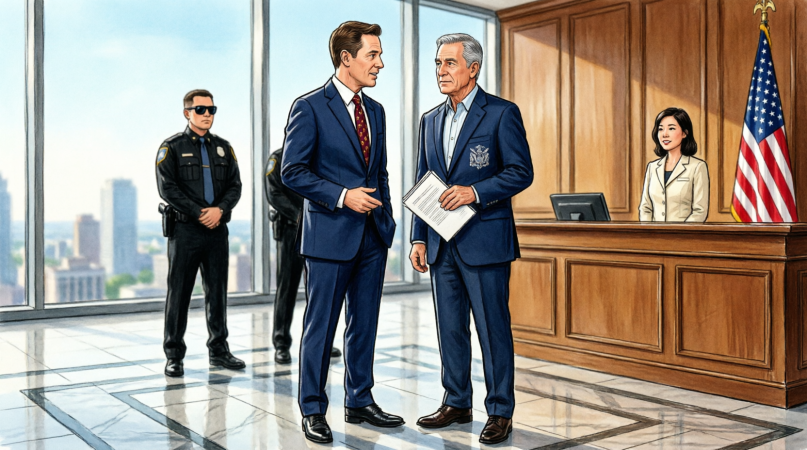
My first day back at the office confirmed it. I walked into the gleaming marble lobby of my firm, coffee in hand, feeling the familiar pre-work buzz, and then I saw him, my father. He was standing near the reception desk, looking completely out of place in his khaki pants and golf jacket. He clutched a briefcase in one hand, his posture rigid, his face a mask of grim determination. He looked like a general surveying a battlefield.
Jenna, the young receptionist, gave me a wide-eyed, panicked look as I approached, my father’s eyes locked onto mine. He didn’t say hello. He just strode forward, blocking my path to the elevators. “We need to talk,” he said, his voice low and commanding, meant to carry.
“This isn’t the time or the place, Dad,” I said, keeping my voice even.
I was acutely aware of my co-workers streaming past, their curious glances like tiny pin pricks on my skin. You’ve made it the place. He shot back, his voice rising. You’ve aired our family’s private business for the world to see and dragged it into your workplace. Now you’re going to fix it.
He snapped open his briefcase on a nearby bench and pulled out a single sheet of paper. He thrust it at me. This is a letter of apology to your mother, to Liam, to the entire family. You will sign it and you will post it in the family group chat, and you will send a formal retraction to your human resources department explaining that your sister-in-law was acting out of genuine concern and you overreacted.
I glanced at the letter. It was a masterpiece of manipulation, painting me as an emotional, unstable person who had misunderstood my family’s well-intentioned actions. My signature at the bottom would be a confession. It would validate every lie Chloe had told.
“No,” I said simply.
His face turned a dangerous shade of red. “What did you say?”
I said, “No, I am not signing that.”
“You are going to sign it,” he boomed, his voice echoing in the high ceiling lobby. Heads turned. The whole building seemed to go quiet. “You have embarrassed this family for the last time. You owe your mother an apology. Your behavior has caused Liam and Chloe undue stress. And for what? Some childish need for attention.”
Jenna was now speaking quietly but urgently into her phone. Security to the front lobby, please.
I looked my father directly in the eye. The man who had never once stood up for me. The man who had stood by and watched as I was pushed aside year after year. The only thing I’m going to do, I said, my voice shaking slightly but holding firm, is go upstairs and do the job that I have earned, the job you are trying to jeopardize.
I started to walk around him. He grabbed my arm. You’re not walking away from me. Sir, you need to let him go. A firm voice came from behind us. Two security guards had materialized, their expressions calm but unyielding.
My father’s hand dropped from my arm as if he’d been burned. The sight of external authority had finally pierced his bubble of parental control. “This is a family matter,” he snarled at the guards.
“It’s a corporate lobby, sir,” the guard replied evenly. “And you’re causing a disturbance. Please leave the premises.”
My father stared at me, his eyes blazing with a fury I had never seen before. It was the fury of a king whose authority had been challenged in his own court. As the guards gently but firmly began to escort him toward the door, he pointed a trembling finger at me.
You’ll regret this, Chase. You’re choosing a building over your blood. You will end up with nothing. No family, no inheritance. Nothing.
The word inheritance hung in the air. A final pathetic threat. I didn’t say a word. I just watched them lead him away.
The letter he had brought lay on the floor where he dropped it. I bent down, picked it up, and in full view of Jenna and the security guards, I tore it neatly in half and then in half again. I dropped the pieces into the lobby trash can on my way to the elevator. The doors slid shut and as the car began to rise, I finally let out the breath I hadn’t realized I was holding.
The office was a minefield of whispers and sideways glances. The lobby showdown had become the morning’s main event. My closest colleague, Sarah, who had always been a bit of a rival, just looked at me, shook her head, and slid a fresh cup of coffee onto my desk without a word. It was a small gesture, but it meant the world.
I spent the day in a fog, trying to focus on schematics and building codes, but my father’s furious face kept swimming in front of my eyes. The HR department sent me a discreet email asking if I wanted to file a formal complaint and assuring me that security had been instructed not to allow my father back into the building. I replied with a simple thank you.
I worked late, losing myself in the familiar comfort of lines and angles. By 8:00, the office was deserted. The only sounds the hum of the servers and the distant whoosh of traffic. I was packing up my things when I heard the chime of the elevator. I froze, my heart starting to pound.
The glass doors to our floor slid open and my uncle Jean walked out. He was wearing his usual work jeans and a flannel jacket, and he was carrying a thermos in one hand and a rolled-up sleeping bag in the other. He looked as out of place in the sleek, modern office as my father had, but for entirely different reasons.
He saw me and gave a small, weary smile. Hey kid, figured you might be working late.
Uncle Jean, what are you doing here? I asked, my voice hoarse with surprise.
He walked over and set the sleeping bag and thermos on the sofa in our reception area. Jenna from the front desk is married to a guy in my bowling league. Word gets around. He looked around the empty office. Figured you might need a security detail for the night shift. My rates are pretty cheap. A cup of coffee and you don’t have to listen to me snore.
I just stared at him. A wave of emotion so powerful it almost knocked me over. My own father had come to my workplace to threaten and humiliate me. My uncle had come to stand guard.
Later that night, as I worked at my desk under the dim glow of my lamp, Jean dozed on the sofa. His presence was a silent, unshakable comfort. During a break, I scrolled through my phone, my thumb hovering over the family group chat. I hadn’t yet left. I saw a new post from my mother, a picture of her and my dad with a caption, “Standing strong with my husband against vicious, unfounded attacks, family should be a sanctuary, not a war zone.”
Underneath, a comment from my cousin Mark, whose struggling construction business had just received a hefty investment from my father. “So sorry you have to go through this, Aunt Eleanor. Some people don’t appreciate what they have until it’s gone.” It was another knife, another betrayal. A few months ago, Mark had called me complaining about my dad’s controlling nature and asking for advice on a project. Now bought and paid for, he was singing the company tune.
I clicked his profile and hit block. It was a small act of defiance, but it felt good. I looked over at my uncle, his chest rising and falling in a steady rhythm. He wasn’t my blood in the same way they were. But he was my family. He was the sanctuary. The rest was just a war zone I was finally learning to walk away from.
The next 3 months were a strange kind of cold war. My family went silent, at least to me. I was officially excommunicated, but the TikTok video continued to circulate in certain corners of the internet. A piece of digital shrapnel lodged in my life. The email from Chloe to HR had been dealt with professionally. David Chun had assured me that my record was clean and that the firm stood by me, but the incident left an ugly stain. I felt like I was walking on eggshells, constantly waiting for the other shoe to drop.
Professionally, however, things were moving at lightning speed. The Sterling Tower was a massive success, hailed by critics as a landmark achievement. The firm’s reputation soared, and so did mine.
Then the email arrived. I had been nominated for the National Architect of the Year Award, one of the most prestigious honors in the industry. The ceremony was a black-tie gala in New York City. My first thought was that I didn’t want to go. The idea of being in the spotlight, of opening myself up to more public scrutiny, was terrifying. But Uncle Jean wouldn’t hear of it.
“You earned this, Chase,” he’d said over the phone. “You are going to walk on that stage and hold your head high. This isn’t about them anymore. This is about you.”
He was right. So, I bought a tuxedo, booked a flight, and flew to New York. Aunt Carol and Maya insisted on watching the livestream from home, promising to cheer louder than anyone.
The night of the gala, I felt like I was in a dream. The ballroom was a glittering sea of chandeliers and evening gowns. I was surrounded by the living legends of my field, people whose books I had studied in college. I felt like an impostor, a kid playing dress up.
I found my assigned table. I was seated with the other nominees and to my surprise, Mr. Sterling himself, the CEO whose building I had designed. He was a powerful, intimidating man in his 60s. But he greeted me with a warm handshake and a surprisingly kind smile.
“Chase, a pleasure to see you again,” he said, his voice a commanding baritone. “The tower is magnificent. Truly, you should be very proud.”
“Thank you, sir,” I managed to say. “That means a lot.”
We made small talk through dinner, but my mind was elsewhere. I knew my family would be watching the livestream. Chloe had made a point of posting about it in the family group chat. A message I only saw because a sympathetic cousin sent me a screenshot. Hoping for the best for Chase tonight, she had written the picture of magnanimity. Even when families have disagreements, we always support each other’s successes. They weren’t watching to cheer me on. They were watching in the hopes I would fail, that my moment in the sun would be denied, proving to them and their followers that I had made the wrong choice by alienating them.
Finally, the moment came. The presenter, a famous architectural critic, walked to the podium. And now for the award for national architect of the year. A montage of the nominated projects played on the huge screens. My heart hammered in my chest. I saw the sweeping glass facade of the Sterling Tower. And for a moment I forgot my fear and felt a surge of pride. I had made that.
The winner, the presenter said, opening the envelope, is an architect whose vision has not only transformed a city skyline, but has done so with a profound sense of humanity and purpose. The winner is Chase Richards for the Sterling Tower.
The room erupted in applause. For a second, I didn’t move. Couldn’t believe it. Mr. Sterling leaned over and clapped me on the back. Go on, son. That’s you. My legs felt like they were made of lead as I walked to the stage. The lights were blinding. The applause was a deafening roar. I shook the presenter’s hand and accepted the heavy glass award.
I stepped up to the microphone, my hands trembling, and looked out at the sea of faceless shadows. I had a speech prepared, a list of people to thank at the firm. But as I opened my mouth, the words wouldn’t come. All I could think about was that empty chair.
Just as the silence was becoming awkward, a figure moved to the podium beside me. It was Mr. Sterling. The crowd quieted instantly, his presence commanding their full attention. He placed a hand gently on my shoulder. If you’ll permit me, he said, his voice resonating through the ballroom. I’d like to say a few words.
Usually, the client just funds the project, but with Chase, you get more than a blueprint. You get a piece of his soul. I stared at him, confused. We had only spoken a handful of times.
During one of our final design meetings, Mr. Sterling continued, turning to address the audience, but still speaking as if to me. I asked Chase what the core inspiration for the building’s central atrium was. It’s a vast open space designed to be the heart of the tower where people can gather, and what he told me has stuck with me ever since.
He paused, letting the suspense build. He said, “I wanted to create a space where everyone felt like they belonged, a place with no empty chairs.”
My breath caught in my throat. I had said that to him in a moment of vulnerability, explaining the design philosophy. I never imagined he’d remember it, let alone repeat it on a national stage.
“A place with no empty chairs,” Mr. Sterling repeated, his voice filled with a sudden powerful emotion in a world that can often feel isolating in a city of millions. This young man’s driving ambition was to create a space for inclusion, for community. That, ladies and gentlemen, is more than just architecture. That is a mission.
He looked directly into the main camera, the one broadcasting the livestream. I knew with a chilling certainty that he knew. He knew exactly who he was talking to.
That is why the Sterling Corporation believes in not just recognizing this talent, but investing in it. We believe in building more places where there are no empty chairs.
Click Here to continuous Read Full Ending Story PART2: My brother texted: “no room for you on this year’s christmas trip.” i replied, “okay.” it’s the same story every year. an hour later, my parents posted a “perfect family” photo from their ski lodge even the dog was there. but when they discovered the vacation i took without them, my phone exploded.
My brother texted: “no room for you on this year’s christmas trip.” i replied, “okay.” it’s the same story every year. an hour later, my parents posted a “perfect family” photo from their ski lodge even the dog was there. but when they discovered the vacation i took without them, my phone exploded.
Part 1 of 2